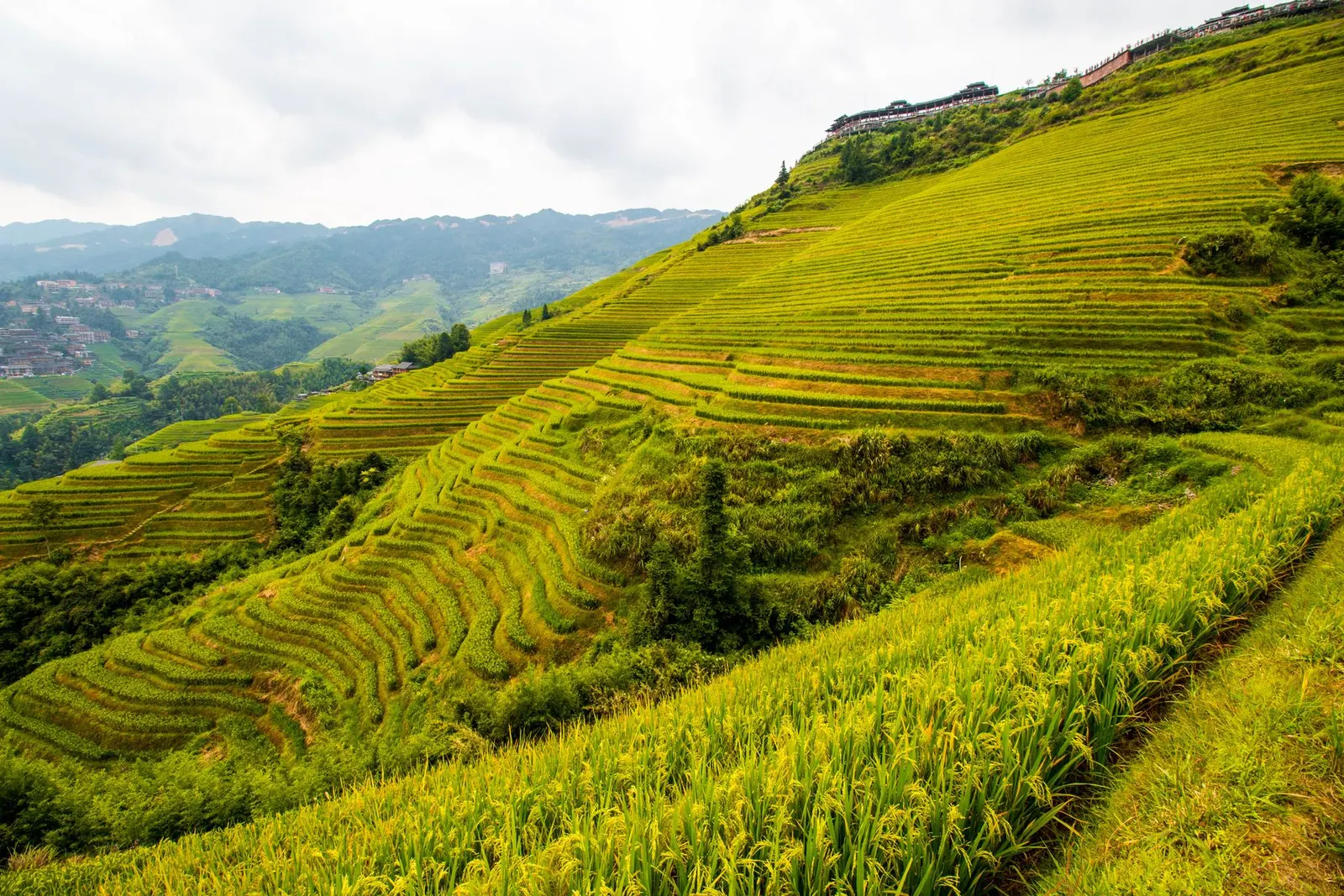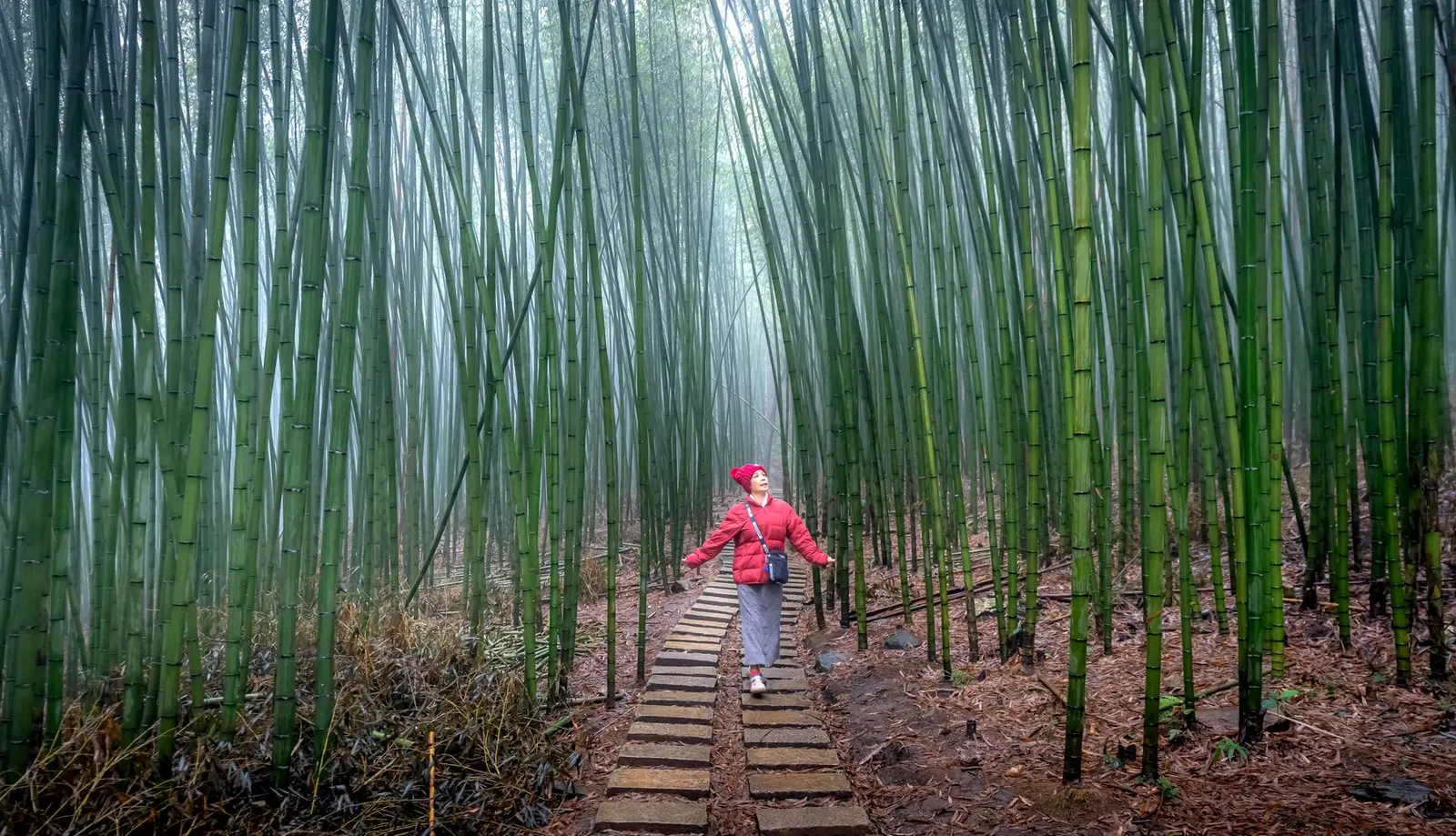
In 1990, under 17% of China was forest. A generation later that figure is close to a quarter of the entire country. Behind the number sits one of the largest tree-planting efforts in history, from shelterbelts across the dry north to the steep, mist-wrapped reserves of the southwest, where giant panda habitat in Sichuan, the bamboo slopes of Wolong, and the turquoise valleys of Jiuzhaigou have become sanctuaries as much as scenery. This study pulls the full World Bank record of China’s forest cover, cleans it, and projects where the share is heading.
From under 17% to nearly a quarter of the country
In 1990 forest covered about 16.74% of China’s land area. By 2023 that share had reached 24.03%, a gain of roughly 7.3 percentage points in a little over three decades. The solid line below is the historical record. The dashed line is a forecast through 2030, and the shaded cone is its 80% uncertainty band.

A steady climb, decade by decade
The gain did not arrive in a single burst. Lined up against the 1990 baseline, each milestone year is higher than the last: by 2000 forest cover was up about 2.1 points, by 2010 about 4.6 points, and by 2020 about 6.7 points. It is the rare environmental trend that simply keeps going in one direction.
About 25.4% by 2030, if the trend holds
Extending the historical trend points to roughly 25.43% forest cover by 2030, with a tight 80% band running from about 25.4 to 25.5%. Treat it as a baseline trajectory, not a promise: the model assumes the steady regime of the past three decades continues, and it does not account for fire, drought, or policy change. One honest caveat matters most: this is total forest area, which includes planted forests and plantations, not only natural or old-growth forest. A rising percent is real reforestation, but it measures tree cover, not the richness of the ecosystem beneath it. That distinction is exactly the kind of question data can keep us honest about, and the whole series is reproducible from the script linked below.