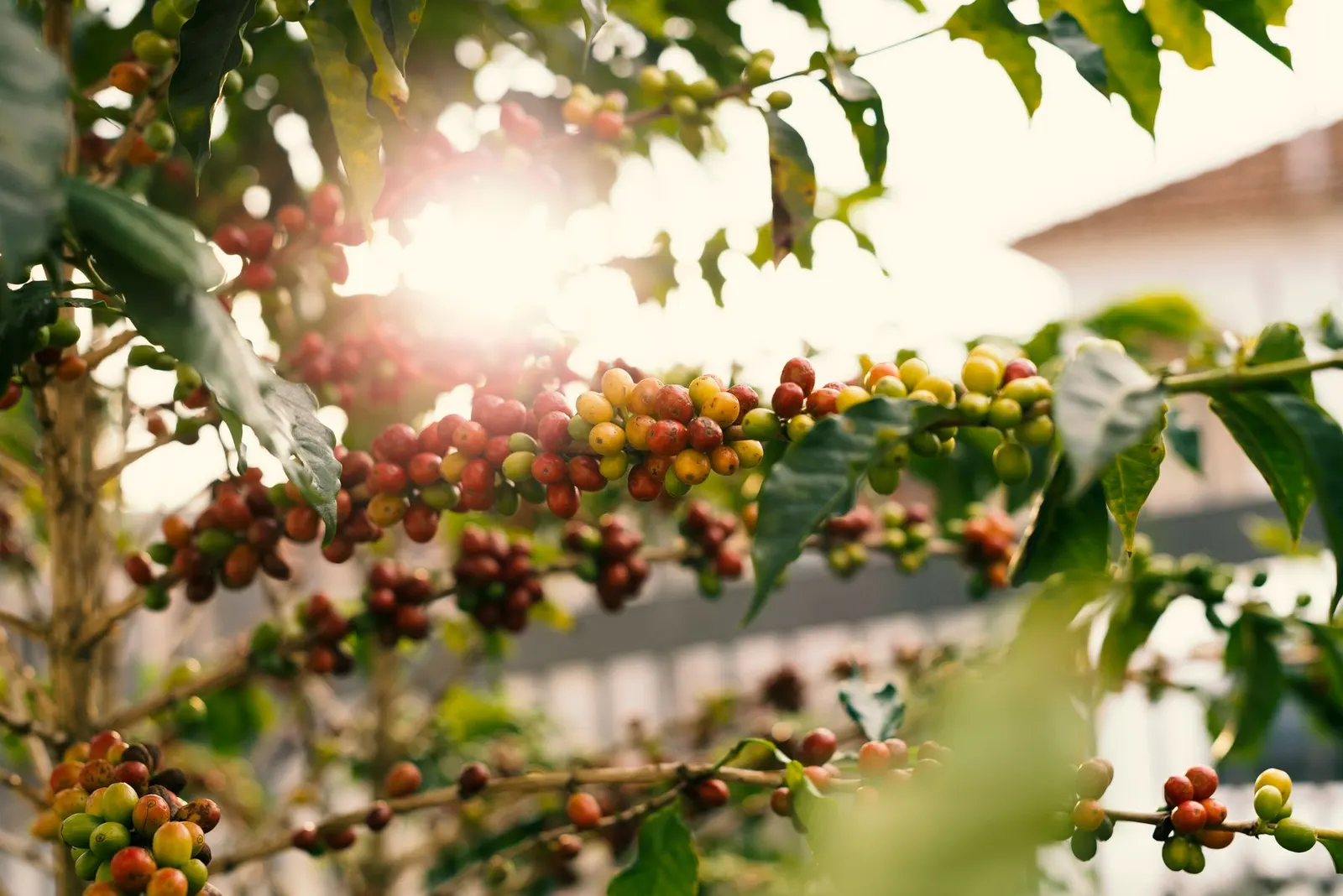
Coffee is one of the most traded agricultural commodities on earth, yet the plain question, how much do we actually grow, has a surprisingly specific answer. This study pulls the full FAOSTAT record of green-coffee production, cleans it, and projects where global output is heading.
Production has grown two and a half times since 1961
In 1961 the world harvested about 4.5 million tonnes of green coffee. By 2024 that figure reached 11.3 million tonnes, a steady climb driven by rising demand and expanding cultivation. The solid line below is the historical record. The dashed line is a forecast through 2030, and the shaded cone is its 80% uncertainty band.
A handful of countries grow most of it
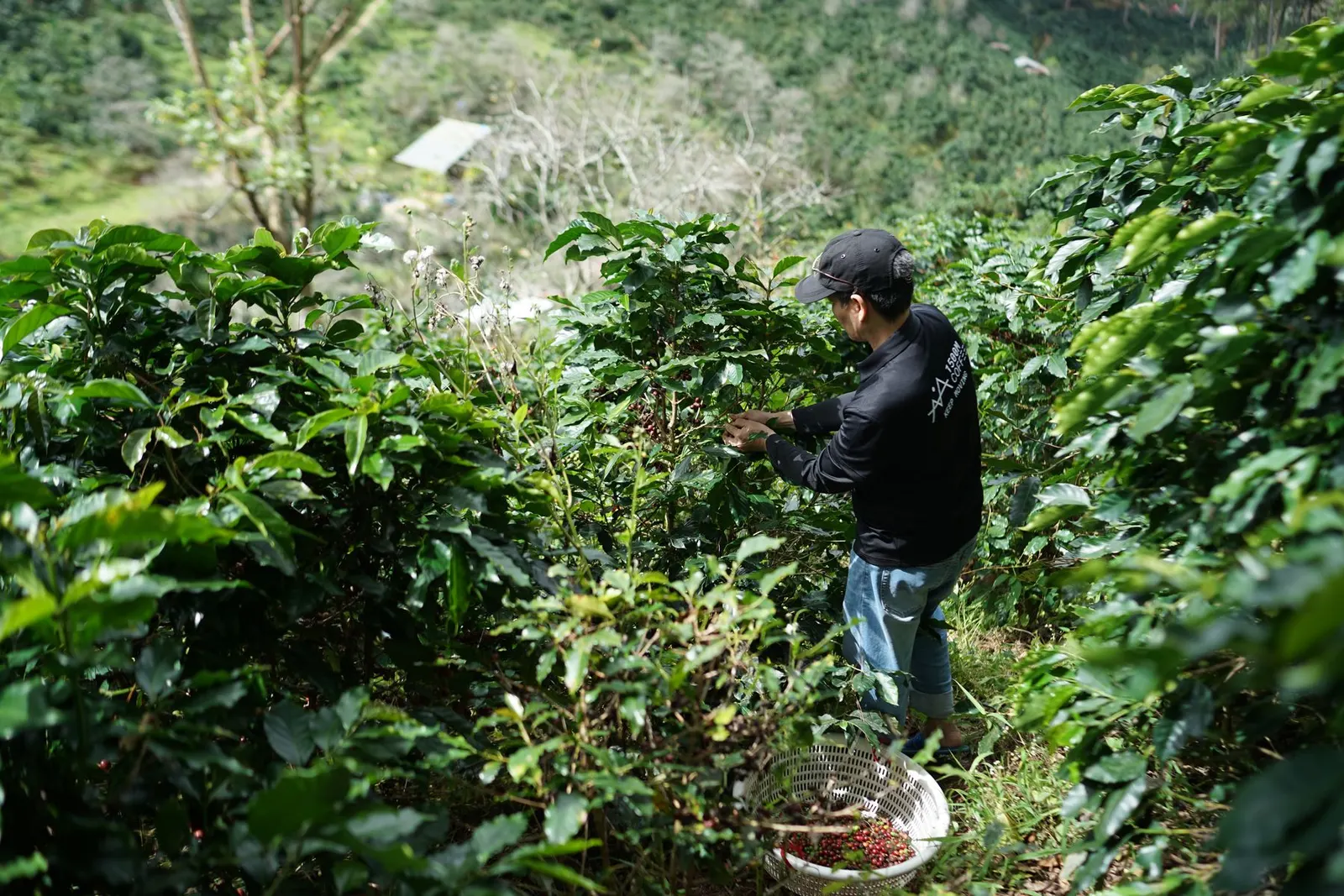
Production is strikingly concentrated. Brazil alone accounts for roughly 30% of the world’s green coffee, and together with Vietnam and Colombia the top three grow more than half of it. That concentration is exactly why a frost in Brazil or a drought in Vietnam moves the price on every café menu.
About 12.5 Mt by 2030, if the trend holds
Extending the historical trend points to roughly 12.5 million tonnes by 2030, with an 80% band running from about 11.0 to 13.9 Mt. This is a baseline trajectory, not a market call. It assumes the growth regime of the past continues, and it deliberately does not model climate shocks, price swings, or shifting demand. That honesty is the point: the model is simple, transparent, and fully reproducible from the script linked below.