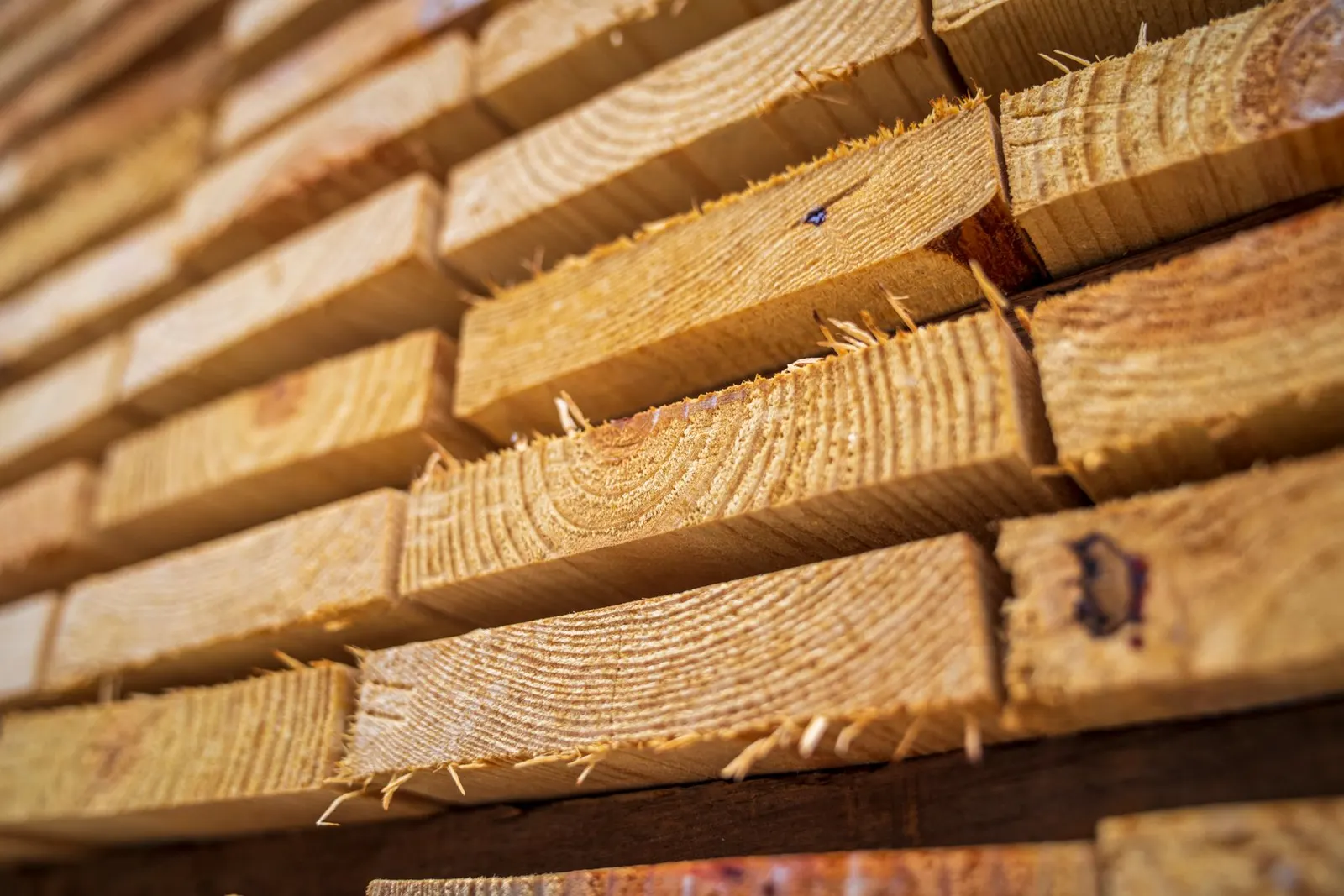
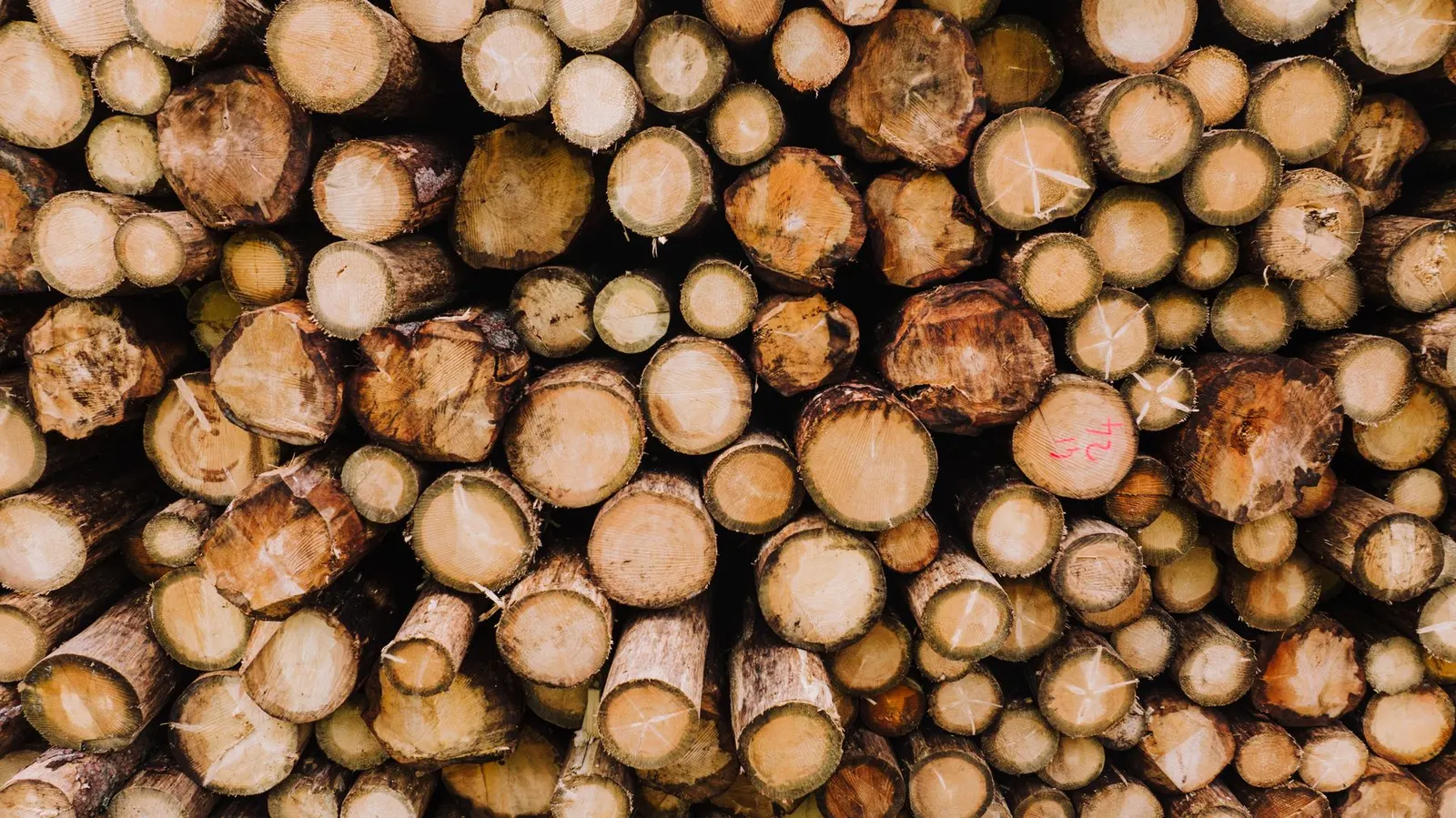
Almost everything wooden starts the same way: a tree comes down and becomes roundwood, the raw logs a forest gives up. Some of it is sawn into timber and pulped into paper, and a large share is simply burned for fuel. This study pulls the full FAOSTAT Forestry record of roundwood production, cleans it, and projects where global output is heading.
Production has grown about 1.6 times since 1961
In 1961 the world cut roughly 2,516 million cubic metres of roundwood. By 2024 that figure reached about 3,905 million cubic metres, a slower climb than many fast-growing commodities but a steady one. The solid line below is the historical record. The dashed line is a forecast through 2030, and the shaded cone is its 80% uncertainty band.
No single country dominates the way you might expect
Roundwood is far less concentrated than crops like coffee. The largest producer, the United States, accounts for only about 9.8% of world output, and the top four (the United States, India, China, and Brazil) sit close together near the top. India, Ethiopia, Nigeria, and the Democratic Republic of the Congo rank high largely because so much of their roundwood is woodfuel burned for cooking and heat, not commercial timber.
Around 4,050 M m³ by 2030, if the trend holds
Extending the historical trend points to roughly 4,054 million cubic metres by 2030, with an 80% band running from about 3,864 to 4,244 M m³. This is a baseline trajectory, not a market call. It assumes the slow, steady growth of the past continues, and it deliberately does not model forest policy, climate disruption, or shifts in the balance between fuelwood and industrial timber. One more caveat: “roundwood” mixes wood burned for fuel with wood sawn into lumber, so a large national total is not always a large timber industry. The model is simple, transparent, and fully reproducible from the script linked below.