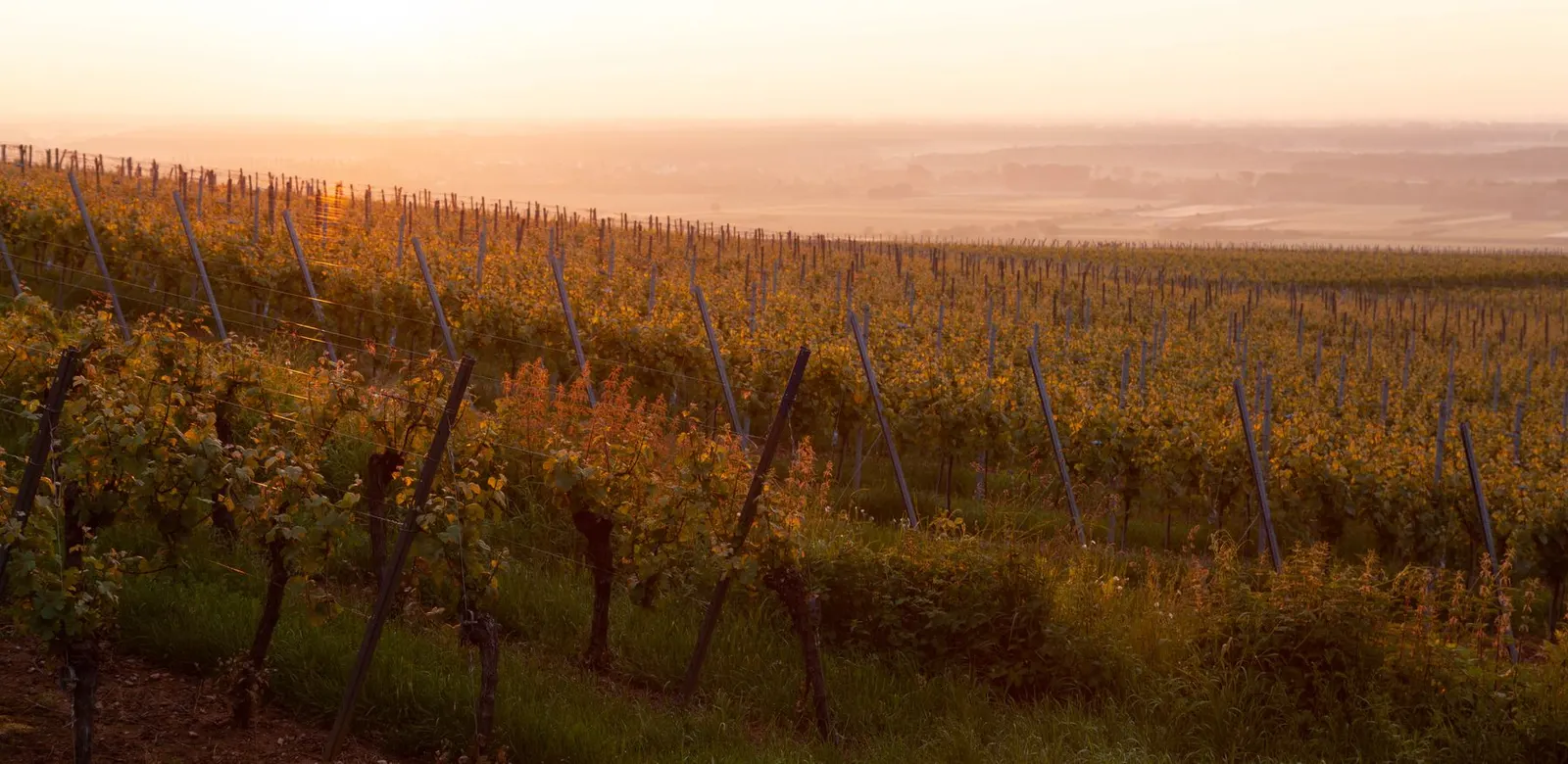
Wine is one of the oldest things humans make on purpose, yet the plain question, how much do we actually produce, has a precise answer. This study pulls the full FAOSTAT record of world wine production, cleans it, and projects where global output is heading.
Six decades that barely moved
This is the rare commodity that has not really grown. In 1961 the world made about 21.5 million tonnes of wine. In 2023 it made 24.4 million tonnes, only modestly higher, after peaking near 37 million tonnes around 1980. The 2023 figure is the lowest in three decades. The solid line below is the historical record. The dashed line is a forecast through 2030, and the shaded cone is its 80% uncertainty band.
A handful of countries make most of it
Production is strikingly concentrated. France alone makes roughly 19.5% of the world’s wine, and together with Italy and Spain the top three make nearly half of it. That concentration is exactly why a bad harvest in southern Europe moves the entire global total, as it did in 2023.
About 25 Mt by 2030, if the trend holds
Extending the recent trend points to roughly 25 million tonnes by 2030, with a wide 80% band running from about 17 to 33 Mt. That band is the real story. Treat the central line as a baseline trajectory, not a forecast of any given vintage. It assumes the recent regime continues, and it deliberately does not model weather shocks, vineyard area changes, or shifting demand. Wine output swings hard from year to year, and the run of recent declines is a reminder that the honest reading here is the cone, not the line. That caution is the point: the model is simple, transparent, and fully reproducible from the script linked below.